
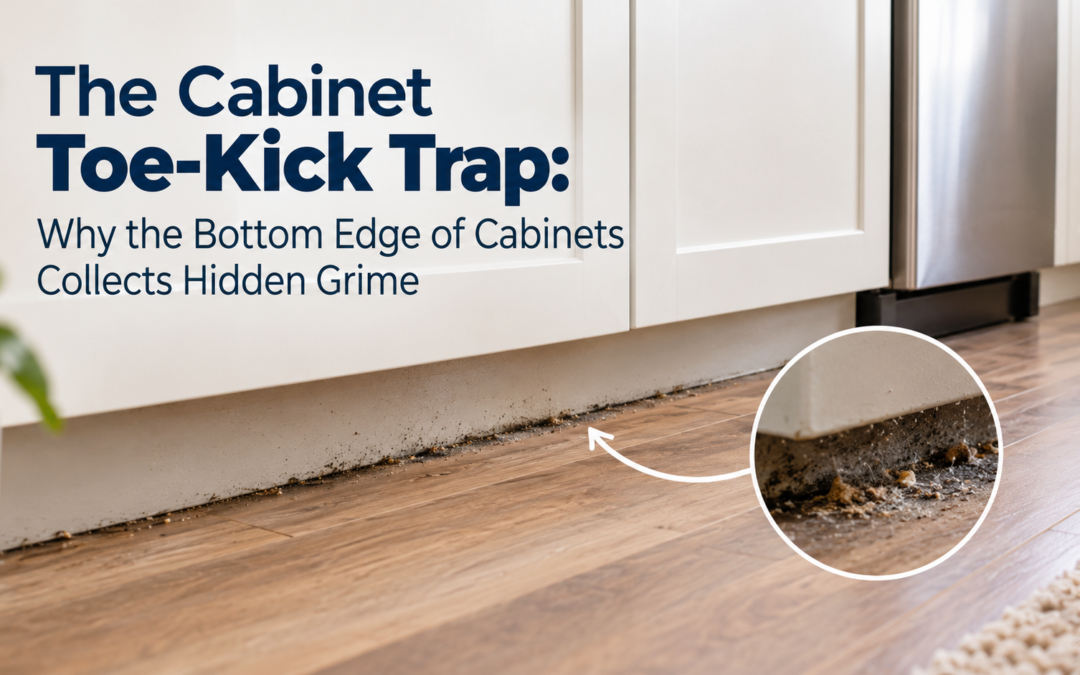
The bottom edge of kitchen and bathroom cabinets is one of those areas that can look clean while quietly collecting dust, crumbs, hair, grease, and other debris. This narrow recessed section, often called the cabinet toe-kick, sits close to the floor and is easy to overlook during everyday cleaning. For homeowners looking for reliable House Cleaning Trophy Club TX, paying attention to these hidden edges can make a noticeable difference in how clean the entire room feels.
Cabinet toe-kicks are designed to give you comfortable standing space while working at a counter, but their location creates a natural trap for debris. Sweeping and vacuuming the main floor may remove most visible dirt, yet particles can remain tucked underneath the cabinet face. Over time, that buildup can become sticky, dusty, or difficult to remove.
Whether you have a busy family kitchen, a guest bathroom, a rental property, or an office break room, these small spaces deserve attention. A thorough cleaning routine does not only focus on large surfaces. It also addresses the overlooked edges where dirt naturally settles.
What Is a Cabinet Toe-Kick?
A cabinet toe-kick is the recessed section along the bottom of a cabinet. It is usually positioned several inches above the floor and set slightly behind the front of the cabinet doors or drawers.
You will commonly find toe-kicks:
- Along kitchen cabinets
- Beneath bathroom vanities
- Around kitchen islands
- Under office cabinetry
- Beneath laundry-room storage
- Along built-in cabinets and shelving
Because toe-kicks are close to the floor, they are exposed to everything that travels across the room.
Dust gets pushed toward them. Crumbs roll underneath them. Hair can collect along their edges. When floors are mopped, moisture can sometimes leave residue along the bottom edge. In kitchens, airborne grease can make dust stick to the surface even more easily.
The result is a narrow area that can become noticeably dirty without attracting much attention.
Why Does the Bottom Edge of Cabinets Collect So Much Grime?
There is nothing unusual about a cabinet toe-kick becoming dirty. Its location makes it particularly vulnerable to everyday debris.
1. It Sits Directly Above the Floor
Dust and debris naturally settle downward. Since the toe-kick is positioned only a short distance above the floor, it catches particles that would otherwise remain on the ground.
Vacuuming the center of the room may take care of most loose debris, but particles can still be pushed toward the cabinet edge.
2. Air Movement Pushes Dust Into Corners
Dust does not simply fall straight down. Air movement from HVAC systems, ceiling fans, doors, and people walking through a room can move lightweight particles around.
Eventually, much of that material settles along walls, corners, furniture edges, and cabinet bases.
This is one reason Trophy Club cleaning services often need to pay attention to edges rather than focusing only on open floor space.
3. The Recessed Design Creates a Small Dead Zone
The toe-kick is often recessed underneath the cabinets. That makes it harder to reach with a regular mop or vacuum attachment.
The recessed design creates a small area where cleaning tools may not make full contact.
Even if the surrounding floor looks spotless, the narrow strip underneath the cabinet can still contain accumulated debris.
4. Kitchen Grease Makes Dust Stick
Kitchen cabinets have another problem: airborne cooking residue.
Cooking produces tiny amounts of grease and oils that can settle on nearby surfaces. When this residue reaches the lower cabinet area, dust can stick to it.
Instead of loose dust that can easily be removed, the surface may eventually develop a dull or slightly sticky film.
This is especially noticeable around cabinets located near stoves, ovens, air fryers, and other cooking appliances.
What Can Build Up Around a Cabinet Toe-Kick?
The grime underneath cabinets is not always just ordinary dust.
Depending on the room and how frequently it is cleaned, the area may collect a combination of:
- Dust
- Food crumbs
- Hair
- Pet hair
- Lint
- Dirt tracked in from outside
- Grease residue
- Cleaning-product residue
- Small pieces of paper or packaging
- Sand and other fine particles
- Moisture-related residue
In a kitchen, crumbs are particularly common. Small pieces of food can roll underneath cabinets and remain there until they are deliberately removed.
In bathrooms, hair and dust may combine with moisture and product residue.
In homes with pets, pet hair can accumulate quickly along these low edges.
Why Regular Floor Cleaning May Not Be Enough
One of the biggest reasons toe-kicks are overlooked is that homeowners assume floor cleaning automatically takes care of them.
It often does not.
A vacuum may pass near the cabinet but fail to reach the recessed section. A mop may glide across the floor while barely touching the vertical surface. A broom may push debris underneath the cabinet instead of pulling it out.
This means a room can receive regular sweeping, vacuuming, and mopping while the cabinet base continues accumulating grime.
That is why detailed maid service Trophy Club TX should involve more than simply cleaning the most visible surfaces.
A thorough cleaning routine considers how dirt moves through a room and where it tends to settle.
The Difference Between Visible Dirt and Hidden Grime
One of the most frustrating things about toe-kicks is that they can remain unnoticed for a long time.
When you stand normally in the kitchen, the cabinet doors and countertops are at eye level. Your attention naturally goes toward those surfaces.
The toe-kick is much lower.
You may only notice it when:
- You bend down to retrieve something
- You move furniture or appliances
- You clean underneath cabinets
- You inspect a home before selling or renting it
- Sunlight hits the lower cabinets from a certain angle
- You notice dark buildup along the edges
Hidden grime is often revealed when a previously neglected area is finally cleaned.
This is why detail-oriented professional cleaners Trophy Club can make a room look noticeably fresher without changing anything about the cabinets themselves.
How to Clean Cabinet Toe-Kicks Properly
Cleaning these areas does not necessarily require complicated equipment. The most important part is making sure the area is actually reached.
Step 1: Remove Loose Debris
Start by removing loose dirt, crumbs, hair, and dust.
A vacuum with a narrow attachment can be particularly useful because it can reach into tight spaces without simply pushing debris farther underneath the cabinet.
For especially narrow areas, a small cleaning brush may help loosen particles.
Step 2: Check the Material
Before applying a cleaning solution, identify what the cabinet toe-kick is made from.
Different cabinet materials and finishes can react differently to moisture and cleaning products.
Wood, laminate, painted surfaces, vinyl, and other materials may require different approaches.
Avoid saturating the area with water. Excess moisture can seep into seams and edges where it may cause damage.
Step 3: Wipe Away Surface Grime
Once loose debris has been removed, wipe the toe-kick using an appropriate cleaning cloth and product.
Pay attention to the bottom edge and corners rather than making one quick pass across the middle.
If the area has greasy buildup, it may require more than a dry dusting.
Step 4: Work Along the Entire Cabinet Line
Do not stop after cleaning the most noticeable section.
Cabinet toe-kicks can run across an entire kitchen or bathroom, and buildup may vary from one section to another.
Check around:
- Cabinet corners
- Kitchen islands
- Sink cabinets
- Areas beside appliances
- Cabinet sections near trash cans
- Bathroom vanities
Step 5: Let the Area Dry
After cleaning, make sure the surface is properly dried.
The goal is to remove grime without leaving unnecessary moisture behind.
Why Kitchen Toe-Kicks Need Extra Attention
Kitchen cabinets are particularly vulnerable because the kitchen is one of the busiest rooms in the home.
People prepare food, walk between counters, unload groceries, clean dishes, and move appliances throughout the space. Every activity can introduce or redistribute dirt.
The lower cabinet area can also be affected by spills and splashes.
A small amount of food or liquid may travel beneath a cabinet without being noticed immediately.
Once dust sticks to that residue, the area can become much harder to clean.
For homeowners investing in deep cleaning Trophy Club TX, cabinet toe-kicks are a worthwhile area to include because they can contribute to the overall appearance of the kitchen.
Bathroom Vanities Have the Same Problem
The toe-kick beneath a bathroom vanity may not deal with cooking grease, but it has its own sources of buildup.
Hair is one of the most common culprits.
Dust, hair, lint, and product residue can gather near the bottom of a vanity. Moisture from showers, sinks, and regular bathroom use can make the debris more noticeable.
The area may also collect small particles from tissues, towels, bath mats, and personal-care products.
A quick bathroom cleaning can make the sink and mirror look excellent while leaving the lower vanity edge untouched.
Detailed cleaning means looking below eye level, too.
The Cabinet Toe-Kick Trap During Move-In and Move-Out Cleaning
Toe-kicks become especially important when preparing a home for a new occupant.
During everyday living, furniture, rugs, appliances, and other objects can hide areas that are difficult to reach.
When a home is empty, these overlooked areas become much easier to see.
That makes them especially relevant to move in cleaning Trophy Club TX and move out cleaning Trophy Club.
A move-out cleaning should help remove accumulated dust and debris left behind by normal occupancy. A move-in cleaning, meanwhile, gives the new occupant a cleaner starting point.
The same principle applies to rental properties.
A small amount of buildup along cabinet bases may not seem important during daily life, but it becomes much more noticeable when a property is empty and being inspected.
Common Mistakes People Make When Cleaning Toe-Kicks
Even when homeowners remember to clean this area, a few common habits can make the job less effective.
Only Vacuuming the Floor
Vacuuming is important, but the cabinet itself may still need attention.
If the vacuum head cannot reach the recessed area, dirt can remain behind.
Using Too Much Water
More moisture does not necessarily mean better cleaning.
Excess water around cabinet edges can create problems, especially when it reaches seams or unfinished materials.
Ignoring Corners
Corners are often where debris becomes concentrated.
A quick horizontal wipe may leave dirt tucked into the ends of the cabinet line.
Cleaning Only When Dirt Is Visible
By the time grime becomes obvious, it may already have accumulated for some time.
Regular attention prevents a small maintenance task from turning into a more difficult cleaning project.
Forgetting Kitchen Islands
Kitchen islands are often cleaned on the top and sides while the lower toe-kick is forgotten.
Because people walk around islands frequently, this area can collect plenty of dust and debris.
How Often Should Cabinet Toe-Kicks Be Cleaned?
There is no single schedule that works for every home.
The right frequency depends on household activity, pets, cooking habits, flooring, and how quickly dust accumulates.
For a busy kitchen, a quick vacuum or dusting of the toe-kick can be incorporated into regular floor cleaning.
A more detailed wipe-down can be done periodically.
Homes with pets or young children may benefit from more frequent attention because additional hair, crumbs, and debris can reach the lower cabinet areas.
The important thing is consistency.
Small, regular cleaning tasks are usually easier than waiting until layers of grime have accumulated.
How Professional Cleaning Can Catch the Details
A professional cleaning routine can help identify the areas homeowners naturally overlook.
Experienced professional maid service near Trophy Club Texas does not mean treating every surface exactly the same way. Different areas of a home collect different types of dirt.
Cabinet toe-kicks require attention to:
- Low edges
- Recessed spaces
- Corners
- Material type
- Grease or residue
- Loose debris
- Moisture control
These details can be especially helpful during recurring cleaning Trophy Club because regular visits provide opportunities to maintain areas before buildup becomes difficult.
For homeowners comparing weekly cleaning Trophy Club TX, affordable maid service Trophy Club, or a reliable house cleaning service in Trophy Club TX, it is worth asking whether detailed lower surfaces and cabinet edges are included in the cleaning approach.
Small Areas Can Change the Look of a Room
A cabinet toe-kick may only be a few inches high, but it runs along a large amount of cabinet space.
That means a small amount of grime repeated across an entire kitchen can make the room appear less polished.
Clean cabinet bases create a more finished appearance.
This is particularly noticeable with lighter cabinets, where dark dust and debris can stand out.
Even darker cabinets benefit from regular cleaning because buildup can create a dull or greasy appearance.
The goal is not perfection in every second of everyday life. It is simply to prevent overlooked areas from becoming permanent dirt traps.
A More Complete Cleaning Checklist
When cleaning a kitchen or bathroom, consider looking beyond the obvious surfaces.
A detailed checklist might include:
- Countertops
- Cabinet fronts
- Cabinet handles
- Appliance surfaces
- Floors
- Baseboards
- Corners
- Behind and beneath accessible furniture
- Cabinet toe-kicks
- Sink areas
- Light switches
- Door handles
- High-touch surfaces
This approach helps shift cleaning from simply making a room look tidy to actually addressing where dirt accumulates.
For homes needing affordable deep cleaning services in Trophy Club, this kind of attention to overlooked details can be particularly valuable during a first-time or seasonal cleaning.
Keeping Cabinet Toe-Kicks Cleaner Between Professional Visits
Professional cleaning can handle accumulated grime, but simple habits can help maintain the area between visits.
Try to:
- Vacuum along cabinet edges regularly.
- Wipe spills as soon as they happen.
- Clean crumbs before they are pushed underneath cabinets.
- Check around trash and recycling areas.
- Pay attention to kitchen islands.
- Include bathroom vanity bases in bathroom cleaning.
- Avoid soaking cabinet surfaces.
- Use the appropriate product for the cabinet finish.
These habits take little time but can prevent buildup.
The Bottom Line: Do Not Let the Toe-Kick Become a Dirt Trap
The cabinet toe-kick is easy to ignore because it sits below normal eye level. Yet its location makes it one of the places where dust, hair, crumbs, grease, and other debris can quietly accumulate.
Cleaning the floor around a cabinet does not always mean the cabinet base itself has been cleaned. Recessed spaces, corners, and narrow edges need to be deliberately reached.
For homeowners looking for House Cleaning Trophy Club TX, a detailed cleaning approach should consider these small but important areas. Whether you need routine maintenance, move out cleaning service in Trophy Club TX, deep cleaning, or help keeping a busy household under control, paying attention to cabinet toe-kicks can make the finished result feel much more complete.
At All Star Maids, the goal is not simply to clean what is easiest to see. It is to help keep your home looking and feeling cleaner from the surfaces you notice every day to the hidden edges that quietly collect grime.
When the cabinet doors look clean but the bottom edges have been forgotten, the job is not quite finished. Give those overlooked spaces the attention they deserve, and your kitchen or bathroom can look noticeably fresher from top to bottom.
If you are searching for House Cleaning Trophy Club TX, choose a cleaning approach that does not overlook the details. Sometimes, the smallest spaces make a surprisingly big difference.
Contact us at 817–577–9977 or visit https://allstarmaids.com/ to book your service.