

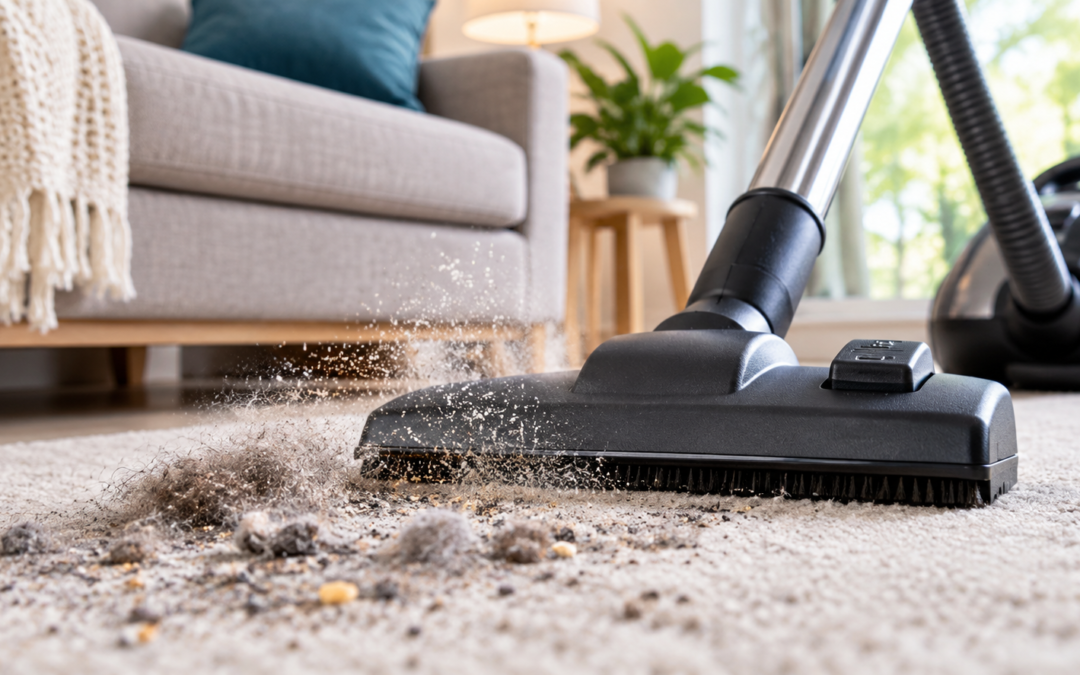
You vacuum your floors regularly, so they should be getting cleaner — not dirtier. But if dust seems to come back almost immediately, your vacuum may actually be contributing to the problem. A vacuum that isn’t maintained properly can push dust around, release fine particles back into the air, and leave dirt trapped in areas you thought were already clean.
For homeowners searching for House Cleaning Grapevine TX, understanding how your vacuum works can help you maintain a cleaner home between professional cleanings. At ALL Star Maids, we know that keeping a home truly clean involves more than simply running a vacuum across the floor. The condition of the vacuum itself, how you use it, and what you clean before and after vacuuming can all make a difference.
How Can a Vacuum Make Your House Dirtier?
A vacuum is designed to collect dirt and debris by pulling air through the machine. Ideally, dust and other particles stay inside the vacuum while cleaner air is released.
However, when something isn’t working properly, the vacuum may not be capturing everything it picks up.
A poorly maintained vacuum can:
- Release fine dust back into the room
- Push debris instead of collecting it
- Spread unpleasant odors
- Lose suction
- Leave dirt behind in carpet fibers
- Circulate dust through the air
You may still see a cleaner-looking floor, but that doesn’t necessarily mean the vacuum removed everything.
Your Vacuum Filter Could Be the Problem
One of the most overlooked parts of a vacuum is the filter.
Filters are responsible for trapping dust and other tiny particles before air leaves the machine. Over time, they become covered in dust and debris.
When a filter is clogged, airflow decreases. The vacuum may become less effective, and fine particles can potentially escape instead of staying contained.
How Often Should You Clean Your Vacuum Filter?
The answer depends on the type of vacuum you own.
Some filters are washable, while others need to be replaced. Always follow the manufacturer’s instructions.
As a general habit, check your filter regularly rather than waiting until the vacuum begins performing poorly.
If the filter looks heavily coated with dust, smells unpleasant, or appears damaged, it may be time to clean or replace it.
An Overfilled Dust Bin Can Reduce Cleaning Power
If you have a bagless vacuum, you might be tempted to empty the dust container only when it’s completely full.
That’s not always a good idea.
As the dust bin fills, airflow can become restricted. This can reduce suction and make it harder for your vacuum to pick up additional debris.
Instead of waiting until the container is packed, consider emptying it more frequently.
This is especially important when you’re cleaning:
- Pet hair
- Large amounts of dust
- Carpet debris
- Crumbs
- Fine dirt
A simple emptying routine can help your vacuum perform more effectively.
The Brush Roll May Be Full of Hair
If you have pets or long hair in your household, your vacuum’s brush roll may be collecting more than you realize.
Hair can wrap tightly around the rotating brush. Eventually, the buildup can interfere with its ability to move properly.
A dirty brush roll may:
- Reduce cleaning performance
- Leave hair behind
- Push debris around
- Create unpleasant odors
- Put additional strain on the vacuum
Check the brush roll regularly and remove wrapped hair and debris.
This small maintenance task can make a surprisingly large difference.
Vacuuming Too Quickly Isn’t as Effective
Another common problem has nothing to do with the machine itself.
It’s how quickly you’re using it.
Running a vacuum quickly across the floor may feel efficient, but it doesn’t always give the machine enough time to pick up embedded dirt.
This is particularly important on carpet.
Instead of rushing through each room, use slower, controlled passes. Going over heavily trafficked areas more carefully can help loosen and collect dirt that a quick pass might miss.
You don’t necessarily need to vacuum longer — you just need to vacuum more intentionally.
You’re Probably Missing the Edges
Vacuuming the center of the room is easy.
The edges are another story.
Dust, hair, crumbs, and dirt often accumulate along:
- Baseboards
- Corners
- Under furniture
- Along walls
- Around furniture legs
- Stair edges
These areas can remain dirty even when the middle of the floor looks spotless.
When you eventually disturb that buildup, some of the dirt can make its way back onto areas you’ve already cleaned.
That’s why detailed vacuuming should include edges and corners rather than focusing only on open floor space.
The Wrong Vacuum Setting Can Cause Problems
Many modern vacuums have different settings for different floor types.
Hard floors and carpets don’t always require the same approach.
If your vacuum has adjustable height or brush settings, use the appropriate option for the surface you’re cleaning.
Using an unsuitable setting can make the vacuum harder to push or reduce its ability to collect debris.
For delicate flooring, always follow the flooring manufacturer’s recommendations and the vacuum manufacturer’s instructions.
Don’t Forget the Vacuum Hose
A vacuum can lose suction because of a blockage inside the hose.
Small objects, hair, and accumulated debris can become trapped inside and restrict airflow.
If your vacuum suddenly seems weaker than usual, inspect the hose and other accessible areas for blockages.
Other warning signs include:
- Unusual sounds
- Weak suction
- Reduced debris pickup
- The vacuum becoming unusually hot
- A strange smell
Addressing a blockage early may prevent additional problems.
Your Vacuum Needs Cleaning Too
It sounds strange, but one of the best ways to improve your cleaning routine is to clean the cleaning equipment.
Your vacuum collects the dirt from your home, so naturally, it becomes dirty over time.
Make vacuum maintenance part of your regular household routine.
Clean or inspect:
- Filters
- Brush rolls
- Dust bins
- Hoses
- Attachments
- Wheels
- Exterior surfaces
A clean machine is better positioned to do the job it’s designed to do.
Pet Owners Have an Extra Challenge
Pet hair can quickly overwhelm a vacuum.
Dogs and cats shed hair that can become embedded in carpets, trapped beneath furniture, and collected around corners.
Pet hair can also wrap around brush rolls and contribute to clogged filters.
If you have pets, you may need to:
- Vacuum high-traffic areas more frequently
- Empty the vacuum more often
- Clean the brush roll regularly
- Check filters frequently
- Pay extra attention to furniture and corners
Regular maintenance is especially important when your vacuum handles large amounts of pet hair.
Vacuuming Isn’t Enough to Remove Every Type of Dirt
Vacuuming is important, but it isn’t a complete cleaning solution.
There are many areas of your home where dust can accumulate that a vacuum doesn’t fully address.
Think about:
- Ceiling fans
- Light fixtures
- Shelves
- Baseboards
- Window sills
- Vents
- Doors
- Upholstery
- Cabinet surfaces
If these areas aren’t cleaned regularly, dust can eventually settle back onto your floors.
That’s one reason a whole-home cleaning approach is more effective than focusing on the floor alone.
Always Dust Before Vacuuming
One simple cleaning strategy can help prevent you from doing the same work twice.
Dust higher surfaces before vacuuming the floor.
Why?
Because dust that falls from furniture, shelves, or other elevated surfaces will eventually land somewhere — and often that somewhere is your freshly cleaned floor.
A better order is:
- Dust higher surfaces.
- Clean furniture and other surfaces.
- Wipe baseboards and other detailed areas.
- Vacuum the floors last.
This allows you to collect the dust that falls during the earlier cleaning steps.
When Should You Replace Your Vacuum?
Regular maintenance can extend the life of a vacuum, but eventually, every machine reaches the end of its useful life.
You may want to consider replacing your vacuum if it consistently has:
- Poor suction
- Frequent blockages
- Damaged hoses
- A malfunctioning brush roll
- Persistent burning smells
- Broken seals
- Frequent mechanical problems
If you’ve cleaned the filters, cleared the hose, emptied the dust bin, and maintained the brush roll but the vacuum still performs poorly, the machine itself may be the issue.
How Professional Cleaning Helps
Even a high-quality vacuum can’t reach every area or remove every type of buildup.
Professional cleaning provides a more detailed approach to maintaining your home.
A professional cleaning service can address areas that are frequently overlooked during routine vacuuming, including baseboards, corners, surfaces, fixtures, and other dust-collecting areas.
At ALL Star Maids, our goal is to help homeowners maintain a home that doesn’t just look clean for a few hours after cleaning, but feels consistently fresher and more cared for.
Professional cleaning can also help reduce the amount of buildup that your vacuum has to deal with between visits.
Simple Vacuuming Habits for a Cleaner Home
You don’t necessarily need a new vacuum to improve your cleaning routine.
Start with a few simple habits:
- Empty the dust bin regularly.
- Replace disposable bags before they’re completely full.
- Clean washable filters according to the manufacturer’s instructions.
- Replace damaged filters.
- Remove hair from the brush roll.
- Check the hose for blockages.
- Vacuum slowly instead of rushing.
- Clean along baseboards and corners.
- Use the correct setting for your flooring.
- Dust surfaces before vacuuming.
These small steps can help your vacuum work more effectively and keep your floors looking cleaner for longer.
Frequently Asked Questions About House Cleaning Grapevine TX
How often should I vacuum my house?
Most households benefit from vacuuming at least once a week, while homes with pets, children, or heavy foot traffic may require more frequent cleaning.
Why does my floor look dusty shortly after vacuuming?
There may be several reasons. Your vacuum could have a clogged filter, a full dust bin, a dirty brush roll, or reduced suction. Dust may also be falling from furniture, vents, shelves, or other surfaces after you’ve finished vacuuming.
Should I clean my vacuum?
Yes. Regularly checking the filter, brush roll, dust bin, hose, and attachments can help keep the vacuum operating properly.
Should I dust or vacuum first?
In most situations, dust higher surfaces first and vacuum the floors afterward. This allows dust that falls during surface cleaning to be collected from the floor at the end.
Can professional cleaning help if I already vacuum regularly?
Absolutely. Vacuuming is only one part of maintaining a clean home. Professional cleaning can address surfaces, corners, baseboards, fixtures, and other areas that routine vacuuming doesn’t handle.
Keep Your Vacuum From Working Against You
A vacuum is one of the most useful tools in your cleaning routine — but only when it’s maintained and used correctly. A clogged filter, full dust bin, tangled brush roll, or blocked hose can reduce performance and make your cleaning routine less effective.
The next time you vacuum, don’t just look at the floor. Take a moment to check the machine doing the work.
If you’re looking for House Cleaning Grapevine TX, ALL Star Maids can help with the detailed cleaning tasks that go beyond everyday vacuuming. From dust buildup and overlooked surfaces to the corners and areas that are easy to miss, professional cleaning can give your home the deeper level of care it needs.
Contact us at 817–577–9977 or visit https://allstarmaids.com/ to book your service.