

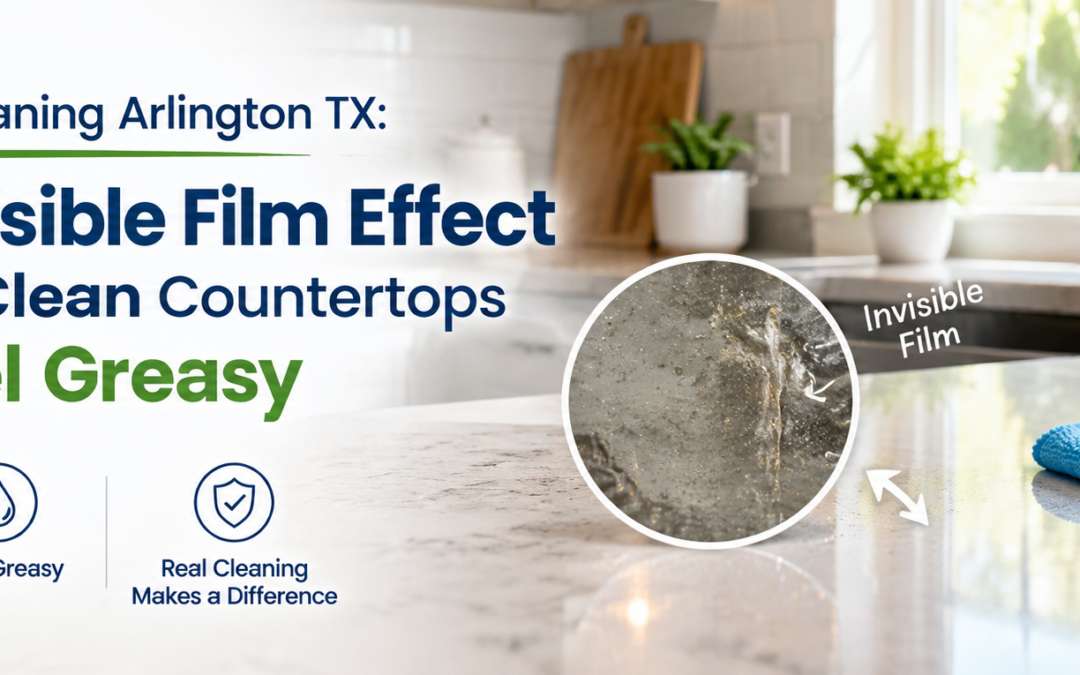
Have you ever finished wiping your kitchen countertops, admired their shine, and then noticed that the surface still feels greasy, sticky, or slightly tacky? This frustrating problem is more common than many homeowners realize. Even after cleaning, a thin layer of cooking oil, leftover cleaning solution, or incompatible product residue can remain behind. For homeowners looking for House Cleaning Arlington TX, understanding the invisible film effect can help make everyday cleaning more effective and prevent countertops from feeling dirty shortly after they have been wiped down.
A countertop does not have to look visibly dirty to have a layer of residue. Cooking oils can settle on nearby surfaces, concentrated cleaners may leave deposits, and using the wrong products can make streaks and buildup worse. Repeatedly wiping the same area without removing the underlying film may simply spread the residue around.
The good news is that this problem can often be prevented with the right cleaning method, appropriate products, and a little attention to detail. At All Star Maids, we know that maintaining a clean home involves more than making surfaces look shiny. It also means understanding what causes stubborn buildup and how to remove it safely.
Whether you maintain your home yourself or rely on professional cleaners, learning how to identify and prevent countertop residue can help keep your kitchen feeling fresh, comfortable, and genuinely clean.
What Is the Invisible Film Effect?
The invisible film effect happens when a thin layer of grease, soap, cleaning solution, or other residue remains on a countertop after cleaning. Sometimes the film is visible as streaks or cloudy patches. Other times, the only indication is a slippery, waxy, or sticky feeling when you run your hand across the surface.
This buildup can develop gradually. Every time you cook, wipe down the kitchen, or apply a cleaning product, small amounts of residue may remain. Over several days or weeks, these layers can mix with dust, food particles, and fingerprints.
The result is a countertop that looks clean from a distance but never feels completely clean.
Homeowners searching for Arlington cleaning services may be surprised to learn that the problem is not always a lack of cleaning. In many cases, the issue comes from the products being used, how they are applied, or whether the surface is being wiped and rinsed correctly.
How to Recognize Countertop Residue
Look for these common warning signs:
- Sticky patches: Certain areas feel tacky even after wiping.
- Greasy fingerprints: Fresh fingerprints appear unusually noticeable or smear easily.
- Cloudy streaks: The countertop looks dull or hazy under kitchen lighting.
- Uneven shine: Some areas appear glossy while others look cloudy.
- Dust that returns quickly: Fine particles cling to a slightly tacky surface.
- Smearing during cleaning: Your cloth seems to move the grease around instead of removing it.
Recognizing these signs can help you determine whether your countertop needs a different cleaning approach rather than another round of the same product.
1. Cooking Oils Create a Hidden Layer of Grease
Cooking is one of the biggest contributors to greasy kitchen surfaces. When you fry food, sauté vegetables, prepare meat, or cook with butter and oil, tiny droplets can travel through the air and settle on nearby countertops.
These particles may be difficult to see, especially on patterned granite, quartz, or darker laminate surfaces. However, they can gradually create a thin oily coating that attracts dust and other debris.
Why Ordinary Water May Not Be Enough
Oil and water do not mix easily. As a result, wiping an oily countertop with a damp cloth may spread the grease instead of lifting it away.
The surface might look better temporarily because the water redistributes the residue. Once the moisture evaporates, however, the greasy feeling returns.
For better results, use a cleaner specifically suitable for your countertop material and effective against kitchen grease. Follow the manufacturer’s directions, including any dilution or rinsing requirements.
A practical cleaning routine includes:
- Remove crumbs and loose debris before wiping.
- Apply the appropriate cleaner in the recommended amount.
- Use a clean microfiber cloth to lift grease rather than spread it.
- Turn the cloth frequently so you do not transfer collected oil back onto the surface.
- Rinse with a separate clean, damp cloth if the product instructions require it.
- Dry the countertop using a fresh microfiber cloth.
Homeowners looking for reliable house cleaning services in Arlington TX can benefit from these simple techniques because effective cleaning depends on removing residue, not just moving it around.
2. Using Too Much Cleaner Can Leave a Sticky Film
It is easy to assume that more cleaning solution means better results. Unfortunately, excessive product can leave a residue that makes countertops feel sticky, slick, or coated.
Some cleaning formulas contain surfactants, fragrances, and other ingredients that can remain on surfaces if too much product is applied or the directions are not followed. Concentrated solutions are particularly important to dilute correctly when the label requires it.
The Problem With Repeated Spraying
Imagine cleaning your kitchen every evening by spraying a generous amount of cleaner across the countertop and wiping it once. If the product leaves residue and does not receive the required rinse, a small amount may remain after every session.
Over time, the residue can build up and mix with cooking grease.
Instead of adding more cleaner, try reducing the amount to the recommended level. Allow the product to work for the specified time, then wipe or rinse as directed.
Avoid mixing cleaning products. Combining formulas can cause dangerous chemical reactions, and one product should never be added to another simply because the first one did not deliver the desired finish.
For busy households, professional cleaners Arlington residents choose should understand that product selection, correct dilution, and proper wiping techniques all affect the final result.
3. The Wrong Cleaning Product Can Damage the Finish or Leave Residue
Not every countertop cleaner works equally well on every material. A formula intended for glass, wood, stainless steel, or another surface may not be suitable for granite, quartz, laminate, or natural stone.
Some products can leave visible streaks, while others may affect the appearance of certain finishes. Abrasive powders and harsh chemicals can also damage vulnerable surfaces.
Match the Cleaner to the Countertop
Before using a product, identify the countertop material and check its care instructions.
- Granite: Use a cleaner approved for the particular stone and its finish. Avoid products that may harm the sealant.
- Quartz: Follow the manufacturer’s recommendations and avoid harsh chemicals or abrasive tools that may damage the surface.
- Laminate: Use a compatible, nonabrasive cleaner and avoid excessive moisture around seams.
- Marble: Choose a stone-safe, pH-neutral product. Avoid acidic cleaners such as vinegar and lemon juice.
- Stainless steel: Use a compatible cleaner and wipe in the direction of the grain when applicable.
Always test a new product on a small, inconspicuous area if the manufacturer permits it.
Homeowners seeking top cleaning company Arlington Texas services should look for teams that understand the differences between countertop materials instead of relying on a single product for every surface.
4. Mixing Cleaning Products Can Make Buildup Worse
Using several cleaning products in succession may seem like a good way to achieve a spotless finish. However, applying one product over another without removing the first can create streaking, smearing, or residue.
For example, a degreaser might loosen cooking oils while a second product leaves behind a different type of film. If the first solution is not wiped away properly, the combination can make the countertop feel less clean.
More importantly, mixing products directly can be hazardous. Never mix bleach with ammonia, acids, vinegar, or other cleaning chemicals. Follow each product’s label and rinse between products only when the directions indicate it is appropriate and safe.
A Simpler Cleaning Strategy
For routine countertop maintenance, keep the process straightforward:
- Remove crumbs and food debris.
- Select one compatible cleaner.
- Follow the label’s instructions.
- Wipe with a clean cloth.
- Rinse if required.
- Dry the surface and inspect it under good lighting.
This approach reduces unnecessary product layering and makes it easier to identify the cause if residue continues to appear.
5. Dirty Cleaning Cloths Can Spread Grease Around
Sometimes the problem is not the cleaner at all. It is the cloth being used.
A microfiber cloth that has already collected cooking oil, food particles, or cleaning residue can transfer those materials to other parts of the countertop. Instead of absorbing grease, the cloth may simply smear it across the surface.
Kitchen towels can also accumulate detergent residue, fabric softener, or oils from previous uses. If they are not properly laundered, they may leave their own film behind.
How to Keep Cleaning Cloths Effective
Use clean microfiber cloths for countertop cleaning and replace them as soon as they become heavily soiled. Launder reusable cloths according to their care instructions, using an appropriate amount of detergent and avoiding fabric softener if it interferes with their absorbency.
It also helps to separate cloths used for greasy kitchen surfaces from those used for bathrooms or other areas.
For affordable maid service Arlington homeowners may be considering, attention to cleaning tools is another important factor. Even an appropriate cleaner cannot deliver its best results when the cloth repeatedly transfers dirt back onto the surface.
6. Hard Water Can Contribute to Cloudy Countertops
Hard water contains dissolved minerals, including calcium and magnesium. When water evaporates, these minerals can remain behind and create spots or a cloudy appearance.
Although mineral deposits do not always feel greasy, they can combine with soap or cleaning residue and make a countertop feel rough, streaky, or coated.
How to Prevent Mineral Buildup
If you notice cloudy marks after cleaning, consider whether your water may be contributing to the problem.
Use a clean cloth with the appropriate amount of water, and dry the countertop rather than allowing droplets to evaporate naturally. For persistent deposits, use only a treatment approved for the countertop material.
Avoid applying vinegar or acidic descalers to natural stone unless the manufacturer explicitly confirms the product is safe. Acids can etch marble and damage certain other surfaces.
Regular attention to water spots can help maintain the finish without unnecessary scrubbing.
7. Why a Greasy Countertop Attracts More Dirt
An oily or sticky film can make it easier for dust, crumbs, and other particles to cling to a countertop. This creates a frustrating cycle: the surface feels dirty, you clean it, some residue remains, and new particles settle onto the same area.
Frequently touched areas can be especially affected, including spaces near the stove, food preparation zones, and the edges around small appliances.
Focus on High-Use Areas
Instead of treating every part of the kitchen identically, pay closer attention to areas where grease and residue accumulate most often.
These include:
- Countertops beside cooking appliances.
- Spaces around coffee makers and toasters.
- Areas where cooking oils and condiments are stored.
- Sections used for food preparation.
- Countertop edges and corners where crumbs collect.
- Surfaces around sinks where water and cleaning products may accumulate.
A consistent routine helps prevent buildup from becoming difficult to remove.
For families seeking weekly cleaning Arlington TX, maintaining these high-use areas between appointments can help keep the kitchen comfortable and reduce the effort needed during deeper cleaning sessions.
8. Why Microfiber and Proper Drying Make a Difference
The right cloth can significantly improve your cleaning results. Microfiber is designed to capture fine particles and absorb moisture, making it useful for many everyday cleaning tasks when used correctly.
However, microfiber is not automatically effective if it is saturated with grease or cleaning solution. A dirty cloth can spread residue, while an excessively wet cloth may leave streaks on some finishes.
Use a Two-Cloth Method When Appropriate
For many compatible countertop surfaces, a two-cloth approach can help:
First cloth: Use it with the appropriate cleaner to loosen and lift grease.
Second cloth: Use a separate clean cloth to remove remaining product or rinse as directed.
Finish by drying the surface with a clean, suitable cloth if recommended for the material.
Do not use abrasive pads or scrub aggressively in an attempt to remove a film. The wrong tool can scratch or dull a countertop, turning a cleaning problem into a surface-damage problem.
If the countertop continues to feel greasy after careful cleaning, investigate the product and cloth being used before repeating the process.
9. When Routine Wiping Is Not Enough
Some residue can be removed with a straightforward cleaning routine. Other buildup may require a more thorough approach, especially if multiple products have been applied over time.
If your countertops remain sticky despite following the manufacturer’s care instructions, consider whether the surface has been exposed to incompatible products, excessive cleaner, or accumulated cooking grease.
Persistent cloudiness, discoloration, or a change in texture may indicate that the finish itself has been affected. In that situation, stop experimenting with stronger chemicals and consult the countertop manufacturer or a qualified surface-care professional.
What Professional Cleaning Can Help Address
Professional cleaning can help with routine grease removal, accumulated grime, and overlooked areas around appliances and countertop edges. Experienced cleaners can also follow product instructions and adapt methods to different surfaces.
For homeowners comparing deep cleaning Arlington TX options, it is useful to ask what kitchen surfaces and detailed cleaning tasks are included in the service. A thorough visit should focus on removing everyday soil and addressing areas that regular maintenance may overlook, while respecting the manufacturer’s care requirements.
All Star Maids helps homeowners maintain a cleaner living environment by paying attention to the details that make a difference in everyday comfort.
10. Prevent the Invisible Film Effect With a Consistent Routine
Preventing countertop film is easier than repeatedly removing accumulated residue. A few practical habits can make a noticeable difference.
Daily Habits That Help
- Wipe cooking splashes soon after the surface has cooled and it is safe to clean.
- Use a countertop-compatible cleaner instead of relying on multiple products.
- Follow dilution, contact-time, and rinsing instructions.
- Avoid applying excessive amounts of solution.
- Change cloths when they become greasy or dirty.
- Dry surfaces when appropriate to reduce water spots.
- Clean around small appliances where oils and crumbs tend to accumulate.
Weekly Maintenance
Once a week, inspect areas that receive frequent use. Move lightweight countertop items when practical, clean beneath them, and check for sticky patches or streaks.
Pay attention to corners, backsplash edges, and the spaces around the sink and cooking appliances. These locations can collect residue even when the main countertop looks clean.
If your schedule is busy, professional maintenance may make it easier to stay consistent without letting buildup accumulate.
Homeowners searching for affordable deep cleaning services in Arlington can consider a more detailed cleaning when everyday maintenance no longer seems sufficient. The goal is to address the underlying residue safely rather than repeatedly applying products that may contribute to the problem.
Choosing the Right Cleaning Service for Your Home
A dependable cleaning service should understand that a clean-looking surface is not always a residue-free surface. Product compatibility, careful wiping, clean tools, and attention to detail all contribute to better results.
When evaluating a service, consider the areas you need cleaned, how frequently you want appointments, and whether you need additional attention for kitchens, bathrooms, floors, or other spaces.
All Star Maids offers a helpful option for homeowners who want to maintain a comfortable home without handling every cleaning task themselves. Whether you need regular upkeep or more detailed attention to accumulated grime, choose a service that matches your home’s needs and cleaning priorities.
The invisible film effect is a reminder that effective cleaning is about more than shine. Using the right methods can help countertops feel as clean as they look.
Conclusion: Keep Your Countertops Truly Clean With House Cleaning Arlington TX
The invisible film effect explains why countertops can look spotless but still feel greasy, sticky, or coated. Cooking oils, excessive cleaning products, incompatible formulas, dirty cloths, and mineral deposits can all contribute to the problem. Fortunately, you can often prevent buildup by choosing the right cleaner, following product instructions, using clean microfiber cloths, and removing residue instead of spreading it around.
For homeowners seeking House Cleaning Arlington TX, a consistent cleaning routine is an important first step toward maintaining fresh, comfortable kitchen surfaces. Focus on high-use areas, address spills promptly, and avoid the temptation to solve every cleaning problem with more product.
When household responsibilities become overwhelming or stubborn buildup requires extra attention, All Star Maids can help you maintain a cleaner home with professional cleaning support.
A genuinely clean countertop should feel fresh, not greasy. With the right habits and reliable Arlington cleaning services, you can spend less time repeating the same cleaning task and more time enjoying a kitchen that looks and feels clean.
Contact us at 817–577–9977 or visit https://allstarmaids.com/ to book your service.